
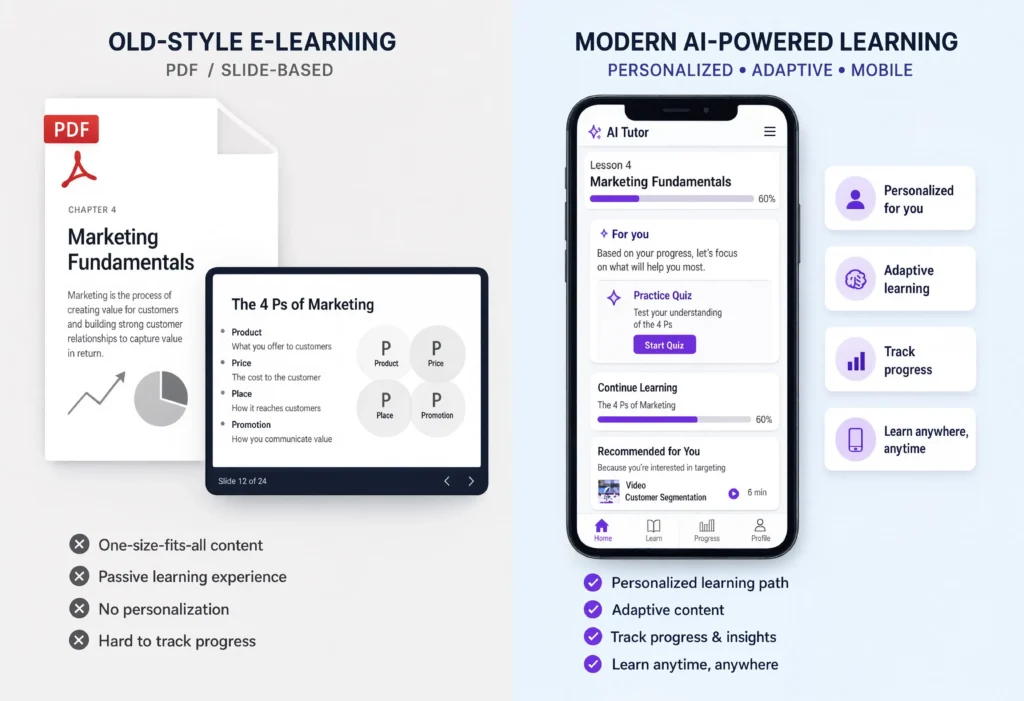
Ten years ago, e-learning was mostly PDFs and long videos. That is not true anymore. Today, learners want content that fits their day. They want short lessons. They want lessons that change based on what they already know.
So what is the future of e-learning? It is not one big new tool. It is a mix of small changes. These changes make learning faster, easier, and more personal.
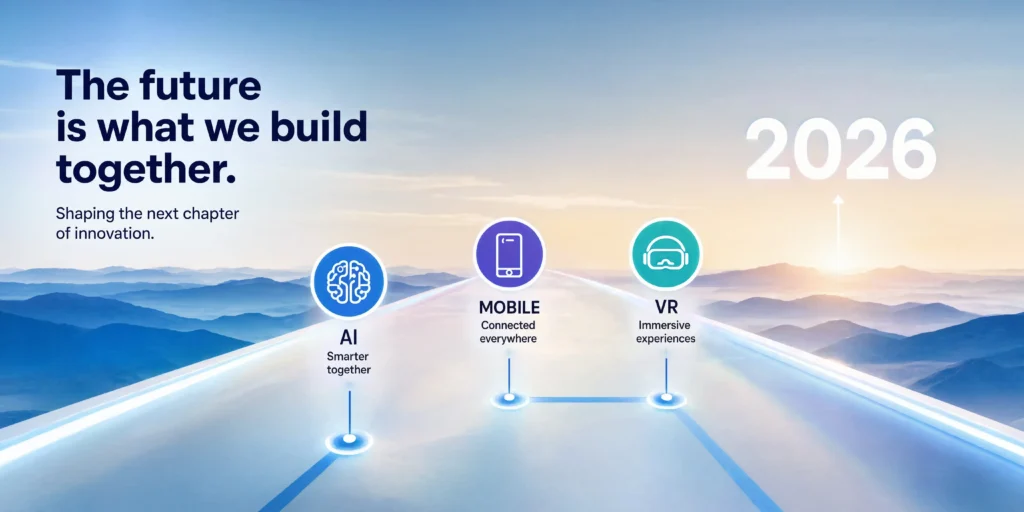
In this guide, we will look at the e-learning trends 2026 that matter most. We will cover AI tools, personal learning paths, short lessons, phone friendly courses, game like features, and virtual reality. By the end, you will know which trends are worth your time.
The Future of E-Learning in Simple Terms
Before we look at each trend, let’s zoom out. A few big things are happening at once. AI tools are cheaper and smarter. People have less time and shorter attention spans. Workers need to learn new skills again and again. And it is faster than ever to build new lessons.
All these changes point to one thing. Lessons are getting shorter and smarter. They also fit better on a phone. And schools and companies are starting to check if people really learn the skill, not just if they finish the course.
This is also changing how teams work. Course teams used to spend most of their time writing long lessons. Now they spend more time checking data and fixing small parts of a course. Short lessons need more updates over time than one long course ever did.
Think of it like a garden instead of a statue. A statue gets built once and stays the same. A garden needs small changes all the time to keep growing well. Good e-learning is turning into a garden.
AI in E-Learning: The Tool Behind Every Other Trend
If one trend drives all the others, it is AI in e-learning. AI can now write a course outline in minutes. It can make quiz questions. It can translate a lesson into many languages fast.
AI also powers chat tools that help learners at any time. A learner can ask a question at midnight and still get an answer.
This change is real, not just a trend. UNESCO’s guidance on AI and education shows the same idea. Schools and companies are told to use AI to help each learner and to free up teacher time for real coaching.
For course teams, AI helps in three ways. It helps write lessons and quizzes fast. It helps answer learner questions right away. And it helps show which learners are struggling before they quit. AI does not replace good teaching. But it saves a lot of time. That is why AI in e-learning shows up in almost every plan for 2026.
“Online learning is not the next big thing, it is the now big thing.”
— Donna J. Abernathy
Personal Learning and Smart Course Tools
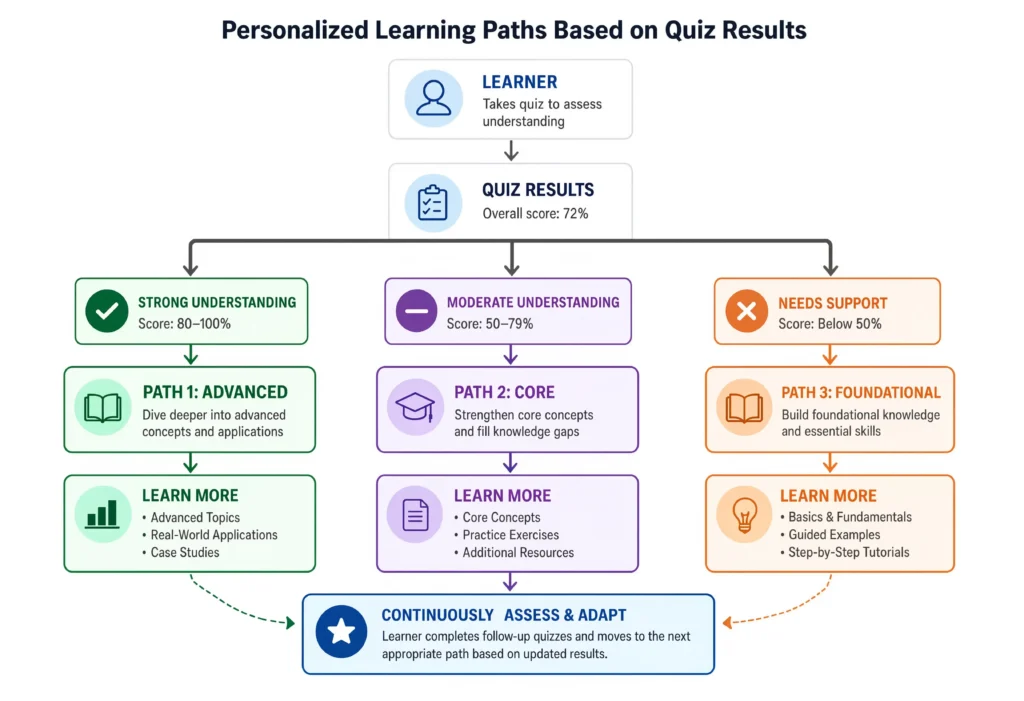
Personal learning used to mean adding a learner’s name to an email. Now it means something bigger. Adaptive learning technology changes the order, level, and type of content based on how a learner is doing right now.
Here is how it works. A learner answers a few questions first. A system checks their strengths and gaps. Then it gives them content that matches those gaps. If someone is stuck on an idea, the system may show a video instead of text. If someone already knows a skill, the system skips ahead.
This makes personalized learning work for many people at once. One system can help thousands of learners at the same time. If you want to compare tools, check our guide to adaptive learning platforms. It covers the basics of adaptive learning technology, the data you need, and common mistakes teams make. Personal learning is no longer a nice extra. It is what learners now expect.
Microlearning: Why Short Lessons Work Better
People still pay attention. They just do not want to sit through long lessons anymore. That is the idea behind microlearning. It means breaking a topic into short parts, often three to seven minutes long.
Short lessons work well because they match how our brain learns. Short lessons plus quick quizzes help people remember more. A short lesson also fits into a coffee break. A long class does not.
This trend is changing how courses are built. Instead of long chapters, think of a course as many small lessons. Learners can skip, repeat, or reorder them. If you want to turn old long courses into short ones, read our post on microlearning strategies for busy teams. It shows how to break up long content the right way.
Mobile Learning: Lessons That Fit In Your Pocket
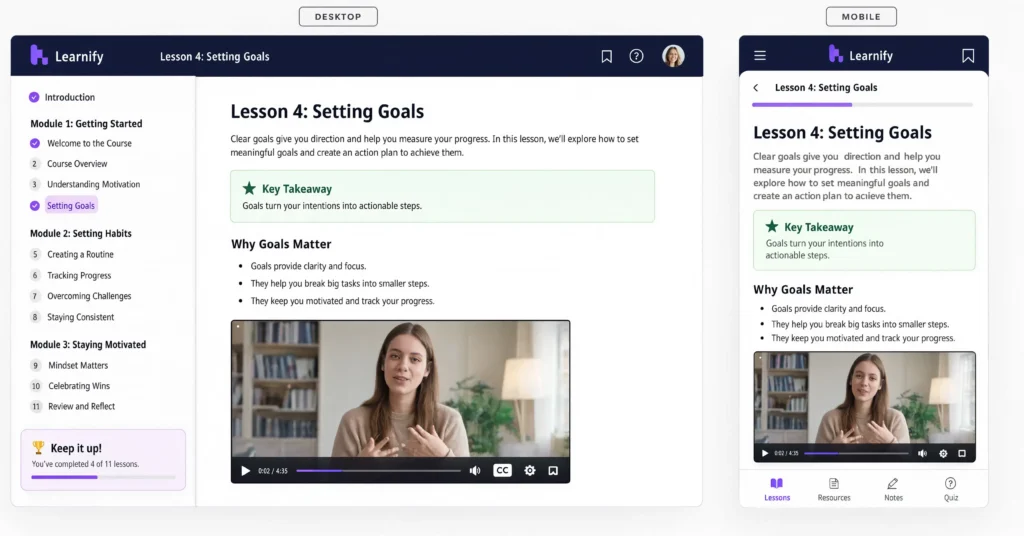
Mobile learning is not new. But in 2026, it is not optional anymore. More people start and finish courses on their phone. This is common in job training, where not everyone sits at a desk all day.
This changes what good course design looks like. A slide that looks fine on a big screen may be hard to read on a phone. Videos need captions, since many people watch with the sound off. Lessons also need to work with a slow internet connection.
Good mobile learning is built for the phone from day one. It is not just a small copy of a desktop course. It also works well with short lessons, since small screens are easier to read with less text. Buttons need to be big enough for a thumb, not a mouse click. Our guide to mobile-first course design covers screen size, offline access, and other tips that keep learners on track.
Gamification in Education: Making Learning Fun
Points and badges alone do not work like they used to. Learners have seen that trick before. Gamification in education is changing. Now it focuses on real skill, not just time spent. Think progress bars tied to real skill, content that unlocks after real practice, and small group leaderboards instead of one big list for everyone.
Good gamification in education taps into real motivation. It gives learners control, a clear sense of progress, and safe ways to try again after a mistake. Bad gamification is just badges that people stop caring about after a week.
Here is a simple test. Does the game part help the learner get better? Or does it just look fun? A daily streak that builds a habit is good. A leaderboard that only rewards speed is not. Our list of gamification techniques that actually move completion rates shows which ideas work and which ones just look good in a demo.
Virtual Reality in Education: Step Inside the Lesson
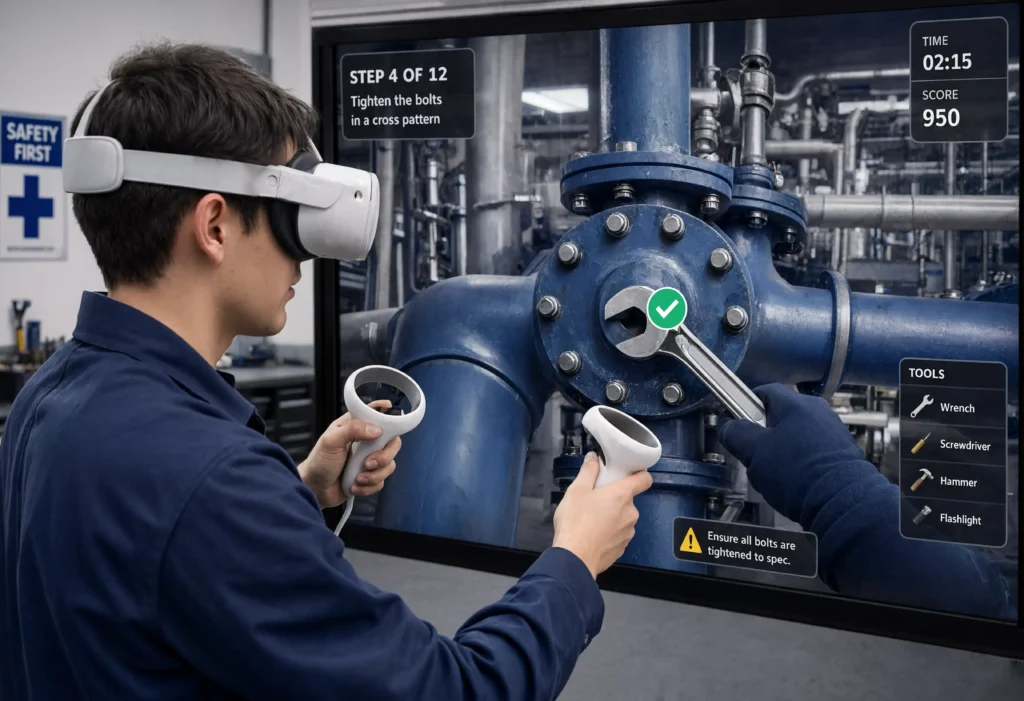
Virtual reality in education is not just a fun extra anymore. It works best for skills that are costly, risky, or hard to practice in real life. Think surgery training, machine repair, handling dangerous material, or practicing a speech in front of a crowd.
Research backs this up. A recent OECD review of digital technologies in education found that tools like VR help with spatial thinking and hands on problem solving, especially in science and math. Learners can try a skill many times in a safe space before doing it for real.
Still, virtual reality in education is not right for every course. Headsets cost money. Some people feel sick using them. Building a good VR scene also takes time. It works best for hands on skills, not for content that a short lesson could teach just as well.
A good rule of thumb helps here. Ask if the skill is truly dangerous or truly hard to copy in real life. If yes, VR may be worth the cost. If the answer is no, a short lesson or a simple video will likely teach the same thing for a lot less money and less setup time.
Other Online Education Trends to Watch in 2026
AI, personal learning, short lessons, phones, and VR get most of the attention. But a few quiet online education trends matter too.
Short skill certificates are growing faster than full degrees, especially for job training. Employers want proof someone can do a task, not just proof they sat through a class. The World Economic Forum’s Future of Jobs Report shows more workers are finishing training programs as part of learning new skills for their jobs. This is pushing platforms to give small, clear certificates instead of one big diploma at the end.
Group learning is also coming back. Live chats, peer feedback, and small group projects help people finish more often than learning alone. People stick with a course longer when someone else is waiting on them, even in a small online group.
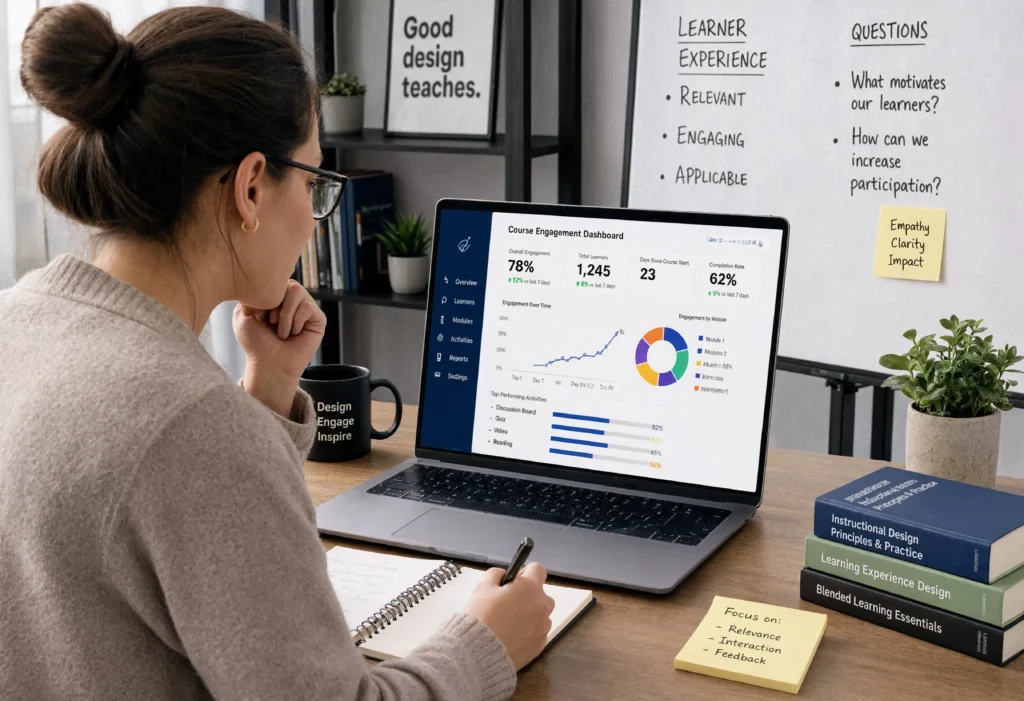
And data tools are getting better. Platforms now track if a skill is actually used, not just if a course was finished. Our post on measuring learner engagement and completion data shows which numbers matter and which ones just look nice on a screen. Together, these online education trends point to a future of online learning that is more honest, more social, and easier to trust.
How to Get Ready for the Future of E-Learning
You do not need every trend at once. Trying to add AI, VR, games, and a full phone redesign all in one go is a fast way to waste money and confuse learners. Start by checking where your current course is failing. Are lessons too long? Are people dropping off on their phones? Are some learners bored while others are lost?
Match the fix to the real problem. Try it with a small group first. Then check the result with real numbers, like course completion or test scores. Getting ready for what comes next is not about grabbing every new tool. It is about testing small changes and using real data to guide you.
Want help with this? Reach out to our team for a free check of your course library. We will help you find which trend to try first.
What This Means for Teachers and Course Builders
Most of these trends land on one group, the people who build and manage courses. That job is changing. Course builders now spend less time writing from scratch. They spend more time checking and fixing what AI writes first.
Experts are also asked to help in smaller pieces. A short answer to one question. A five minute demo clip. Not one long recording session. This fits better with short lessons. Course builders also check data more often now. Which lessons do people quit? Which questions trip people up? None of this needs a data science degree. It just means treating a course like something you keep improving, not something you finish once.
A simple weekly habit helps here. Pick one number to check, like how many people finish a lesson. Look at it every week. Fix the one part of the course that is causing the biggest drop. Small, steady fixes beat one giant redesign almost every time.
Frequently Asked Questions
Q: What is the biggest trend in e-learning right now?
A: AI is the biggest driver right now. It powers personal learning, helps write content fast, and supports much of the adaptive tech used on e-learning platforms today.
Q: Is virtual reality worth the cost for online courses?
A: It depends on the skill. VR headsets work well for hands on, risky, or hard to copy skills, like fixing equipment. For simple content, a short lesson often works just as well for less money.
Q: How is a mobile course different from just watching video on a phone?
A: A true mobile first course is built for the phone from the start. Short lessons, easy to read text, captions on video, and offline access. It is not a desktop course simply squeezed onto a smaller screen.
Q: Does gamification really help people learn?
A: It helps when the game part supports real skill, like unlocking content after real practice. It does not help much when it is just badges and points added on top.
Q: What skills should course builders learn for the future of online learning?
A: Using AI tools well, reading basic data and reports, and building short, phone friendly lessons are the three skills in the most demand right now.
Q: Do these trends work the same for work training and school courses?
A: The same ideas apply to both. But work training tends to move to short, phone friendly lessons faster, since people learn around a job. Schools have been quicker to offer small, verified certificates.
Q: How long before I see results from trying one of these trends?
A: Most teams see a change within one or two content updates. That is often four to eight weeks. This works best when you fix one clear problem at a time, not everything at once.
Final Thoughts
The future of e-learning is not one big new invention. It is many small, useful changes at once. AI is doing more of the busy work behind the scenes. Lessons are shorter and easier to use on a phone. Personalized learning is now normal, not a bonus feature. And teams are finally checking if people are really learning, not just clicking through.
You do not need to rebuild everything overnight. The best results come from picking one or two problems, testing a fix, and building on what works.
Keep an eye on this space. We will keep updating this guide as new e-learning trends 2026 show up this year. But the basic idea should stay the same. Build for the learner. Keep lessons short and easy to reach. And check if people are really learning, not just finishing.