
Most people quit an online course before they finish it. Badges and points alone rarely fix that. The ideas that actually work are the ones tied to real progress, not just shiny stickers slapped on top of a boring lesson.
Below are 7 techniques worth trying, plus a quick example of each one in action. Every one of these is aimed at one thing. Getting more people to actually finish what they started. None of them need a huge budget or a fancy new platform. Most can be added to a course you already have.
Why Most Gamification in eLearning Falls Flat
A lot of courses add points, badges, and a leaderboard, then wonder why nothing changes. The problem is usually that these features sit on top of the course instead of being part of it. A badge for finishing a boring lesson does not make the lesson less boring.
Real eLearning gamification works differently. It changes how a lesson feels to go through, not just what someone gets at the end. Good gamified learning makes the lesson itself more engaging, not just the reward sitting on top of it. The techniques below focus on that difference.
7 Gamification Techniques Worth Trying
1. Mastery Based Unlocks
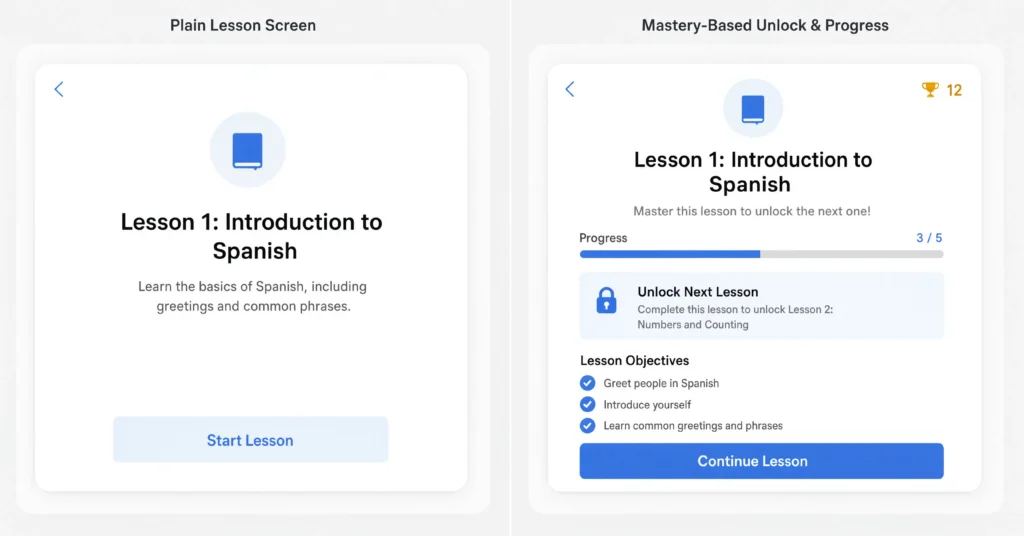
Instead of unlocking the next lesson just because someone clicked next, require a small proof of understanding first. A short quiz, a task, or a correct answer to one key question.
Example: A coding course only unlocks lesson two once someone gets three out of four questions right on lesson one. This one change alone reduced the number of learners skimming past content without absorbing it.
This works because it forces a small pause before moving on. Someone who got a question wrong has to go back and actually understand the idea, instead of clicking next out of habit. Over time, this catches gaps early instead of letting them pile up until a final test.
2. Small Group Leaderboards
A leaderboard with the whole company on it usually discourages everyone outside the top five. A leaderboard scoped to a small group of ten or twenty people feels far more realistic and motivating.
Example: A sales team splits into groups of eight for a product training challenge, with a small leaderboard just for that group, refreshed weekly. Since everyone in the group has a real shot at the top spot, more people actually try, instead of a handful of top performers dominating a company wide list while everyone else tunes out.
3. Progress Bars Tied to Real Skill
A progress bar that just tracks how many pages someone clicked through does not mean much. A progress bar tied to actual skill checks, like passed quizzes or completed tasks, gives someone a real sense of how far they have come.
Example: A course shows a skill bar that only fills up after correct quiz answers, not after simply viewing a page.
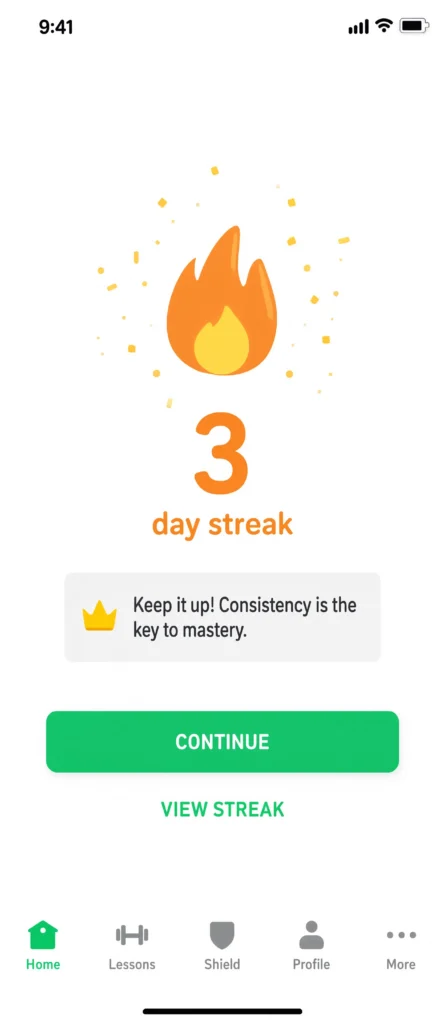
4. Daily Streaks for Short Lessons
A small habit done daily beats one long session done occasionally. A visible streak counter gives people a reason to come back tomorrow, even for just a few minutes.
Example: A language app style streak counter added to a short daily compliance refresher, which noticeably increased how often people logged back in.
A streak works best when missing one day does not wreck everything. A forgiving version, like allowing one missed day a week without breaking the streak, keeps people trying instead of giving up entirely after one bad day.
5. Safe to Fail Practice Rounds
Let people try, get something wrong, and try again without any real penalty. This lowers the fear of looking silly in a real quiz or task later, and people naturally try more when failing costs nothing.
Example: A support team gets a practice simulator where they can handle a fake angry customer call as many times as they want before their real, scored assessment.
6. Unlockable Bonus Content
Add optional bonus content that only appears after finishing the main course. This rewards people who go the distance, without punishing people who only need the core content.
Example: A software training course unlocks an advanced tips video only after someone finishes all the required lessons and passes the final check.
7. Team Based Challenges
Turn a solo course into a team effort. When someone else is counting on you to finish your part, you are far more likely to actually do it.
Example: A customer service team runs a monthly challenge where each person’s individual completion adds to a shared team goal, with a small reward once the whole team hits it together.
This works especially well for people who would otherwise put off a course indefinitely. Letting a teammate down feels more real and more immediate than letting yourself down, so a shared goal often gets people over the finish line faster than a personal one ever could.
For a broader look at where course design is headed, our guide to the future of e-learning covers how gamification fits alongside AI tools and shorter lessons.
How These Techniques Actually Raise Course Completion Rates
Each of the seven ideas above works for a different reason, but they share one thing. They all give someone a clear, small reason to take the next step, right now, instead of putting the course off until later.
A meta-analysis of gamification research across dozens of studies found a real, sizeable positive effect on learning outcomes, not just a feel good boost. That backs up what shows up in practice again and again. Gamification helps most when it is tied to actual skill and actual progress, not just decoration.
Much of this also lines up with basic ideas from research on self-determination and motivation, which points to three things people need to stay engaged. A sense of control over their own choices, a sense that they are actually getting better at something, and a sense of connection to other people. Good gamification examples in education usually hit at least one of these three, which is why mastery unlocks, small group leaderboards, and team challenges tend to outperform generic points systems.
A plain points system usually misses all three. Points do not give someone more control, they do not prove real skill on their own, and they do not connect anyone to another person. That is the simplest way to explain why points alone rarely move the needle, while techniques tied to skill, choice, or other people tend to work far better.
Employee Training Gamification vs Classroom Gamification
Workplace training and classroom courses are not exactly the same. Employee training gamification usually works best when it is tied to something the person will use on the job soon, like the practice rounds and mastery unlocks covered above.
Classroom settings can lean more on social elements, like team challenges and small group leaderboards, since the classroom already has a built in sense of community. Either way, the core idea holds. Tie the game element to something real, not just to time spent watching a screen. Our post on measuring learner engagement and completion data covers how to check whether a gamification feature is actually helping, instead of just assuming it is because it looks nice on a dashboard.
Gamification Best Practices to Keep in Mind
Keep it simple. Two or three well chosen techniques beat ten half built ones. Trying to add every idea on this list at once usually confuses learners instead of motivating them. Like most learning engagement strategies, these work best when a few are done well, not when every option is switched on at once.
Tie every game element to a real skill or a real task. If a badge does not connect to something the learner actually did well, it will feel hollow within a week.
Watch the data, not just the feature. Online course engagement can look better on the surface, like more clicks or logins, without actual learning improving. Check completion and test scores, not just activity numbers, to know if a change is really working.
Adjust based on what learners do. If a leaderboard is demotivating a group instead of motivating them, drop it or shrink the group size instead of assuming everyone just needs to try harder.
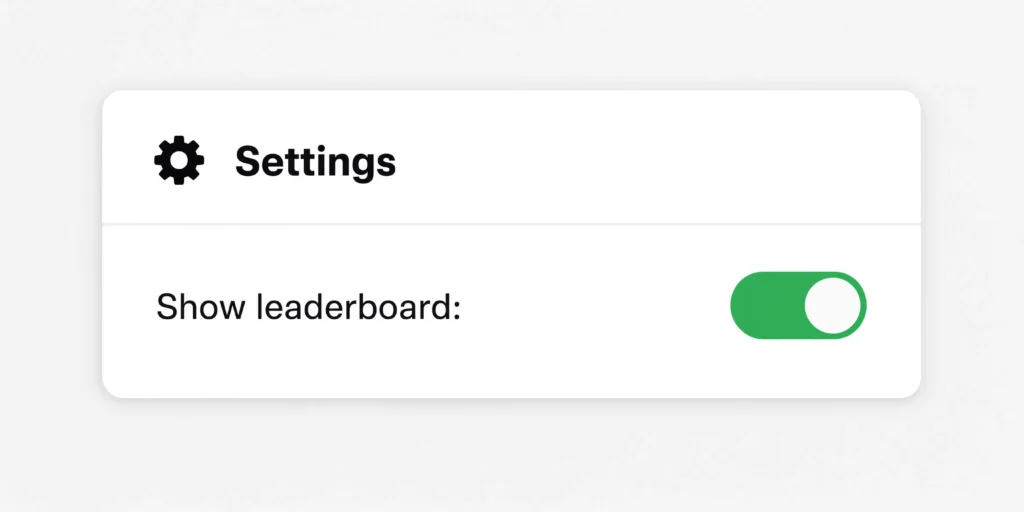
Give people an easy way to opt out of the competitive parts if they want to. Not everyone is motivated by comparing themselves to others, and forcing a leaderboard on someone who hates it can do more harm than good. Our guide to adaptive learning platforms covers a related idea, letting the course adjust to each person instead of treating everyone the same way. A quiet, individual streak or progress bar option covers that group just as well.
Frequently Asked Questions
Q: Do these ideas work for adult learners, not just students?
A: Yes. Adults respond well to gamification when it respects their time and ties to real, useful skills, rather than feeling like a game aimed at kids.
Q: What is the easiest gamification technique to start with?
A: Mastery based unlocks are usually the easiest. You likely already have quizzes. Just require a passing score before the next lesson opens up.
Q: Can gamification actually hurt how many people finish a course?
A: Yes, if it is poorly designed. A demotivating leaderboard, or badges that feel meaningless, can turn people off faster than having no game elements at all.
Q: How do I measure if gamification is actually working?
A: Compare completion rates and test scores before and after adding a technique, for the same type of course. A real improvement should show up in both, not just in how many people log in.
Q: Is it worth adding gamification to a very short course?
A: Usually not much. Short courses that already take five or ten minutes rarely need extra motivation tricks. Save these techniques for longer courses where drop off is the actual problem you are trying to solve.
Final Thoughts
The best gamification techniques are simple, and tied to real skill instead of decoration. Mastery unlocks, small group leaderboards, and short daily streaks tend to beat generic points and badges almost every time.
Pick one or two ideas from this list, try them on one course, and check your completion data before and after. That small test tells you far more than trying to guess what will work.