
If you have ever watched a two minute video to learn a new app feature, or read a short tip before starting your shift, you have already used microlearning. So what is microlearning, exactly? In this guide, we will answer that question in plain words. No jargon, no long tech talk. Just a clear look at what this training style is and why so many companies and schools use it.
This post is part of our bigger guide on eLearning. If you want the full picture of online learning first, you can read our guide on what eLearning is and how it works. Here, we will zoom in on one piece of that world: microlearning.
A lot of people search for what is microlearning because they keep hearing the word at work or in a training meeting, and they want a plain answer. By the end of this post, you should be able to explain what is microlearning to a coworker in one or two sentences, without any confusion.
What Is Microlearning, In Simple Words
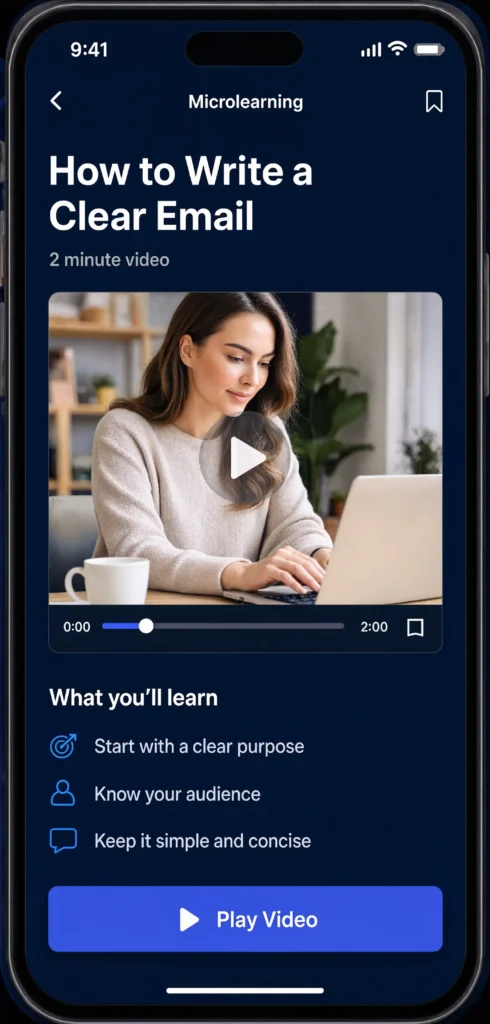
Let’s start with the basic question. What is microlearning? Microlearning is training that comes in small pieces. Instead of a one hour class, you get a short video, a quick quiz, or a one page tip sheet. Each piece teaches just one small idea. You finish it in a few minutes, not a few hours.
Think about how you learn things outside of work. You do not read a whole cookbook to learn one recipe. You watch a short video that shows just that recipe. That is the same idea behind what is microlearning. It breaks a big topic into small, easy pieces.
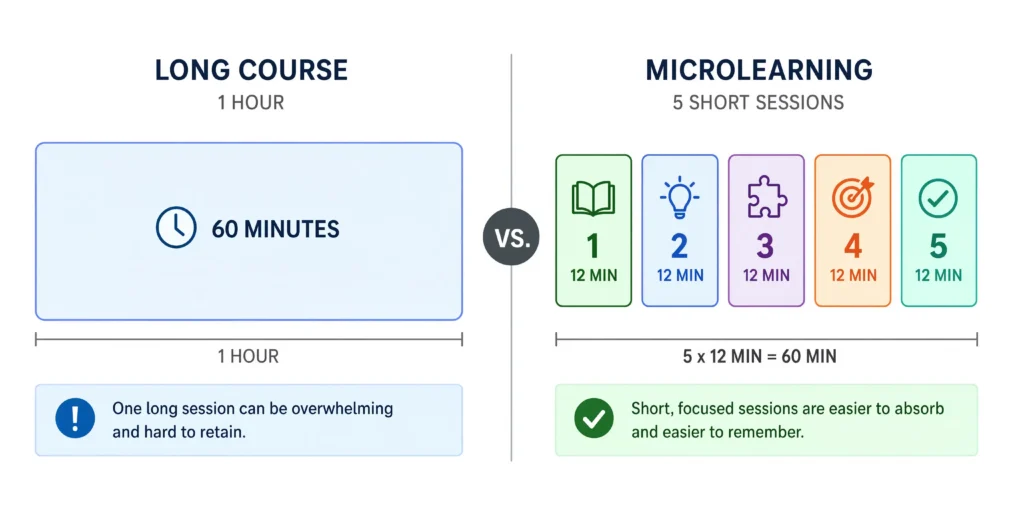
People also ask what is microlearning compared to a normal course. A normal course tries to cover a whole subject in one long sitting. Microlearning does the opposite. It picks one small skill or fact and teaches just that, fast.
Why Microlearning Works So Well
Now that we have covered what is microlearning at a basic level, let’s look at why it works so well for busy people.
Our brains forget new facts fast if we do not use them right away. This is often called the forgetting curve. Short lessons help fight this. When a lesson only takes three minutes, a learner can finish it during a break, between meetings, or while waiting for a bus. This is a big reason companies ask what is microlearning good for. The short answer is that it fits into real schedules instead of fighting against them.
Microlearning also makes it easier to remember one idea at a time. A long class often covers ten ideas at once, and learners forget most of them by the end. A short lesson that covers just one idea sticks much better. This is why understanding what is microlearning matters for anyone building a training plan, not just for the people taking the training.
How Microlearning Is Different From A Full Course
Let’s look at how microlearning is different from a full length course.
A full course might run for an hour or more. It often covers many topics in one sitting. Learners sit through the whole thing even if they only need one part of it.
Microlearning breaks that same content into small pieces. A learner can pick just the piece they need. If they only need to learn one step of a process, they watch the one short video for that step, not the whole course.
This is one of the clearest ways to explain what is microlearning to someone who has only used long courses before. It is not a shorter version of the same course. It is a different way of building the training from the start, piece by piece.
Full courses also often live in one big file or one long session. Microlearning content is built to stand alone. Each piece should make sense even if a learner has not seen any other piece yet.
What Is Microlearning Used For
Microlearning shows up in a lot of everyday places. Here is a short list of where you might already be using it.
- Short how-to videos on a work tool
- Daily safety tips sent by text or email
- Flashcard style quizzes on a phone app
- One page guides for a single task
- Short refresher clips before a busy shift
If you have ever wondered what is microlearning used for in the real world, this list gives you a good starting point. Almost any skill that can be broken into small steps can be taught this way.
Key Traits Of Good Microlearning Content
Most good microlearning content shares a few traits. Knowing these traits helps answer what is microlearning from a more practical angle, since these traits are what make it work.
Short length. Most pieces run from thirty seconds to five minutes. Anything longer starts to feel like a regular course again.
One goal per piece. Each lesson teaches one skill, one fact, or one step. Not ten things at once.
Easy to find. Learners should be able to search for the exact piece they need, right when they need it.
Works on phones. Since people often use microlearning during small breaks, it needs to work well on a small screen.
Quick check for understanding. A short quiz or question at the end helps confirm the idea actually stuck.
Companies that study workplace learning trends, including groups like the Association for Talent Development, have tracked a steady rise in short format training as attention spans and work schedules both get tighter.
“When people ask me what is microlearning, I tell them to picture a single index card, not a whole textbook. One idea, clearly taught, easy to find again later.” — [Placeholder expert quote, to be replaced with a real quote from a founder, training manager, or advisor]
If your team is ready to build this kind of training, our Microlearning Design course walks you through planning short lessons, picking the right format, and testing them with real learners.
How To Start Using Microlearning
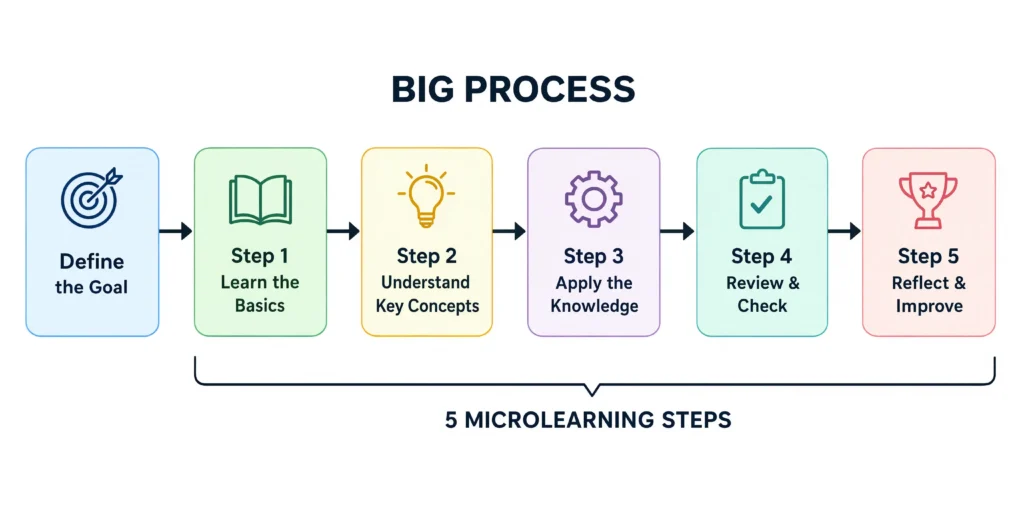
Getting started with microlearning does not need to be complicated. Begin by picking one process that causes the most questions from new staff. Break it into its smallest steps. Turn each step into one short piece, a short video, a one page guide, or a quick quiz.
Keep each piece focused on just one goal. Research from groups like the Nielsen Norman Group has shown that people online tend to skim and scan rather than read closely, which is exactly why short and focused content performs better than long blocks of text.
Test your first few pieces with a small group before rolling them out to everyone. Ask if each piece was clear enough to stand on its own. If a learner needs to watch three other pieces to understand one lesson, it is probably still too long or too tangled.
Many teams also make one common mistake early on. They try to cram a full lesson into a short video, instead of actually cutting the content down. If a five minute video still tries to cover five ideas, it is not really microlearning. It is just a short version of a long class, and it will still feel rushed and confusing.
A better approach is to write down the single goal of each piece before you build it. Ask yourself what one thing the learner should walk away knowing. If you cannot say it in one sentence, the topic still needs to be split further. This one habit alone fixes most of the mistakes teams make when they first try microlearning.
It also helps to track how learners actually use each piece. If a certain lesson gets watched over and over, that might be a sign the step is confusing and needs a clearer explanation. Basic learning principles from groups like the American Psychological Association support this idea, since spacing out and repeating small chunks of practice tends to help memory more than one long session ever does.
FAQ
Is microlearning only good for simple topics?
No. Complex topics can still work well if you break them into a clear series of small steps. The key is teaching one idea at a time, not skipping the hard parts.
What is microlearning best used for?
It works best for skills that can be split into clear, small steps, like software how-tos, safety reminders, and quick refreshers.
Do I need special tools to build microlearning?
Not always. Many teams start with simple tools like a phone camera and a basic quiz app before moving to bigger platforms.
Can microlearning replace all training?
Not usually. It works best alongside longer courses for deep topics, while handling quick skills and reminders on its own.
Final Thoughts
So, what is microlearning? At its heart, it is training broken into small, focused pieces that fit into real schedules and stick in memory better than long sessions. Whether you run a small team or manage training for a whole company, understanding what is microlearning is a useful step toward building training people actually finish. If you want to see how this fits into the bigger picture of online learning, take a look at our full guide on what eLearning is and how it works. And if you are ready to build your own short lessons, our Microlearning Design course is a solid next step.