
Picture two students in the same class. One already knows half the lesson. The other is stuck on the first idea. A normal course treats them the same way. Adaptive learning technology does not.
This guide answers a few simple questions. How does this kind of tool actually work? What real benefits should you expect? And how do you pick the right one without getting lost in a sales pitch? Let’s start from the basics.
What Is Adaptive Learning?
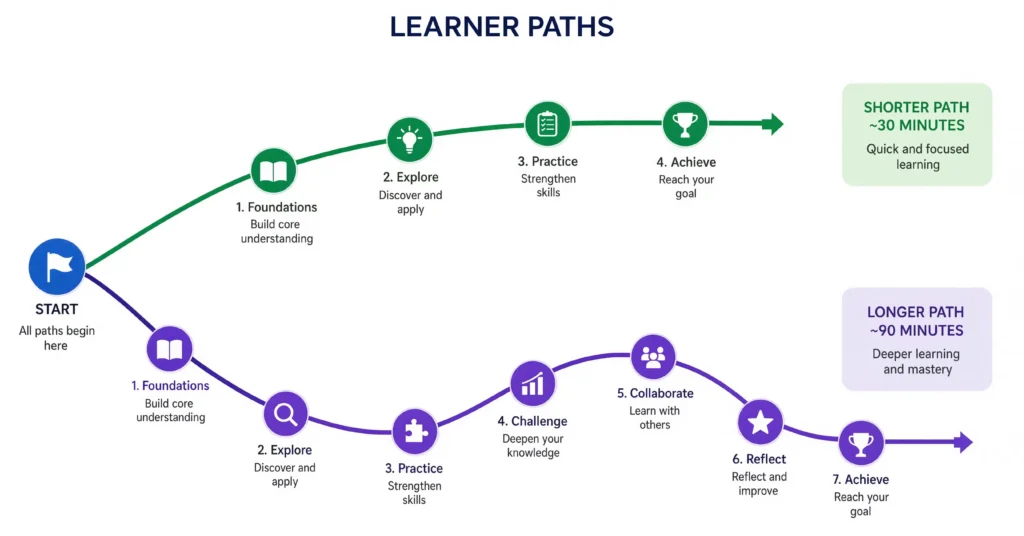
So, what is adaptive learning? In plain words, it is a way of teaching where the course changes based on what a learner already knows and how they are doing right now. A normal course is the same for everyone. An adaptive course is not.
The system looks at answers, quiz scores, and even how long someone takes on a question. Then it changes what comes next. A learner who is struggling may see an easier example. A learner who already knows the topic may skip ahead. This is different from just letting someone click “next” whenever they want. The tool is actually making a choice for them, based on real data, not just letting them wander through the same fixed path as everyone else.
How Adaptive Learning Technology Actually Works
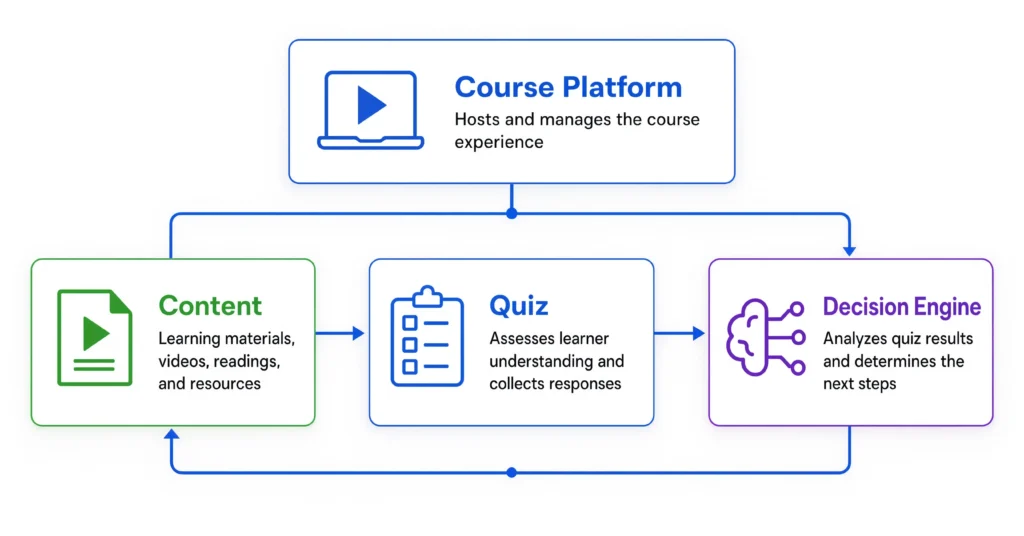
Most tools in this space follow a simple loop. First, the learner does something, like answer a quiz question or finish a short lesson. Second, the system checks the result. Third, it picks the next best step for that one learner.
Behind the scenes, this often uses a mix of rules and simple AI models. A rule might say “if a learner gets three questions wrong in a row, show an easier explanation.” A smarter model can go further. It can look at patterns across thousands of learners and guess which type of explanation will help this one person the most.
This is where the technology starts to feel different from a normal course. The path is not fixed. It bends based on the learner. Two people can start the same course and end up seeing totally different lessons, in a different order, based on their own strengths and gaps. Some vendors call this personalised learning technology, since the whole point is fitting the course to the person, not the other way around.
Here is a simple example. Say two people are learning basic spreadsheets. One already knows how to write a formula but is stuck on charts. The other knows charts well but struggles with formulas. A normal course makes them both sit through the same lessons in the same order. A system like this would notice the difference from their first few answers, then send each person straight to the part they actually need help with.
What a Good Learning Platform Looks Like Day to Day
A strong system is not one single tool. It is usually a set of parts working together. There is content, broken into small pieces. There is a way to test what a learner knows, often a short quiz or task. And there is an engine that decides what to show next.
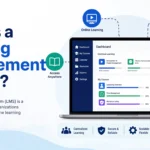
Some products work as a full learning management system with adaptive learning built right in. This means you get one place to store courses, track learners, give certificates, and let the system adjust content automatically. Other tools plug into a learning management system you already use, adding a personalization layer on top instead of replacing your whole setup. Either way, the goal is the same. Meet each learner where they actually are, not where the syllabus assumes they are.
For teams comparing options, it also helps to see the bigger picture. Our guide to the future of e-learning covers where these tools are headed next, and how this fits with other trends like short lessons and phone friendly courses.
AI-Powered Learning Platforms vs Simple Rule Based Tools
Not every tool in this space uses AI. Some just use basic rules, like “if wrong, show a hint.” These can still help a lot, and they are often easier to set up.
AI-powered learning platforms go a step further. They can spot patterns a simple rule would miss, like a learner who understands the ideas but keeps making the same small mistake. Over time, these systems get better at guessing what will help, since they learn from more and more learner data.
Neither option is automatically better. A small team with a simple course might do fine with basic rules. A larger school or company, with thousands of learners and lots of data, often gets more value from a fuller AI-driven option. Research backs this up too. A recent systematic review of AI-driven adaptive learning systems found real gains in test scores and engagement once these tools reach enough learners and data to work with. The right choice depends on your size, your budget, and how much time your team has to manage the tool.
The Benefits of Adaptive Learning
These benefits show up in a few clear ways. Learners waste less time on things they already know. This alone can shorten a course by a large chunk, since nobody has to sit through content they have already mastered.
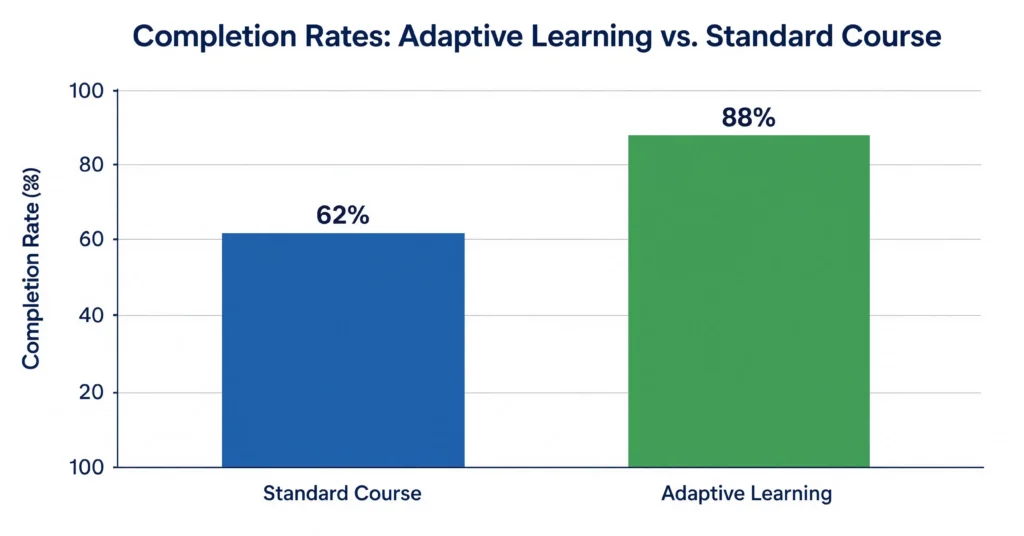
Struggling learners also get help sooner. Instead of failing a big test at the end, they get an easier explanation right when they need it. This can lower drop out rates, since people are less likely to give up when the course keeps meeting them where they are.
Teachers and course managers benefit too. A good system reports where learners are stuck across an entire group, not just one person. That data helps a team decide which parts of a course need fixing, without asking every learner to fill out a survey.
Bigger organisations are paying attention to this too. UNESCO’s guidance on AI and education points to the same idea, encouraging schools and companies to use these tools to support each learner while freeing up teacher time for real coaching, rather than treating the tech as a novelty.
Adaptive eLearning Solutions for Different Team Sizes
Not every team needs the same setup. A small team with one short course might just need simple adaptive eLearning solutions bolted onto a tool they already use. A large company or school with many courses and thousands of learners usually needs something built for scale from day one.
Cost also changes with size. Smaller teams can often start with a free trial or a low cost add-on. Bigger teams should expect to pay more, but they also get more detailed reports and more control over how content adapts. Match the size of the tool to the size of your actual problem, not the size of the sales demo.
How to Choose an Adaptive Learning Platform
There are a lot of tools out there, so it helps to have a simple checklist. Here is how to choose an adaptive learning platform without getting lost in a sales pitch.
First, ask what data the tool actually uses to adapt content. Is it just right or wrong answers? Or does it also look at time spent, hints used, and repeat mistakes? More signals usually mean smarter choices for each learner.
Second, check if it works as a full learning management system with adaptive learning, or if it needs to plug into a system you already use. This changes both the cost and the setup time.
Third, look for real proof it works. Ask for case studies or data from other customers, not just a demo video. A serious vendor should be able to show real numbers, like better test scores or higher course completion.
Fourth, think about your team, not just your learners. Some tools need a lot of setup and tagging before they adapt content well. If your team is small, a simpler adaptive learning software option may serve you better than a big, complex system.
Finally, check how it reports data back to you. Our post on measuring learner engagement and completion data covers the exact numbers worth tracking, so you can judge any platform’s reporting against a clear standard instead of just trusting their dashboard demo.
Common Mistakes Teams Make
The biggest mistake is picking a tool before checking if your content is ready. This kind of system needs content broken into small, taggable pieces. If your course is one long video or one big PDF, the system has nothing to adapt between.
Another common mistake is ignoring mobile learners. If your team studies on their phone, check that the tool actually works well on a small screen, not just on a desktop demo. Our guide to mobile-first course design covers what to check here.
Last, some teams expect the tool to fix bad content on its own. Adaptive learning software can rearrange and personalize what you already have. It cannot turn a boring, unclear lesson into a great one. Good content still matters first.
One more thing catches teams off guard. They roll the tool out to everyone at once, with no small test group first. It is much safer to try it with one course and a small group of learners, fix what breaks, and only then roll it out further. A rushed, full launch makes it hard to tell if a problem is coming from the tool itself or from how it was set up.
Frequently Asked Questions
Q: What does adaptive learning mean in simple terms?
A: It is a way of teaching where the course changes based on how each learner is doing, instead of showing everyone the exact same content in the exact same order.
Q: Is this kind of technology only for schools?
A: No. These tools are used in schools, but also in workplace training, language learning apps, and professional certification programs.
Q: Do I need AI to use adaptive learning?
A: Not always. Some tools use simple rules instead of AI, and these can still help a lot. These systems tend to help more once you have a large number of learners and a lot of data.
Q: How much does a system like this cost?
A: Cost varies a lot, from add-on features inside your existing course system, to standalone platforms priced per learner. Always ask for real case studies before comparing prices.
Final Thoughts
Adaptive learning technology is not just a trend. It is a practical way to save time, catch struggling learners sooner, and use real data instead of guesswork. The benefits of adaptive learning are easiest to see once you try it with even one small course.
Picking the right tool does not have to be hard. Check what data it uses, whether it fits your current setup, and whether it has real proof behind it. Start small, test it with a real group of learners, and grow from there.
Thinking about trying this for your own courses? Reach out to our team and we will help you compare options and pick the one that fits your content and your budget.