
Millions of people learn new skills online every single day. But if you are new to this space, you may still be asking a simple question: what is eLearning and how does it work? This guide answers that question in full. You will learn what eLearning means, how it works behind the scenes, the main types you will run into, the tools that power it, and how to get started, whether you want to take a course or build one.
What Is eLearning? A Simple Definition
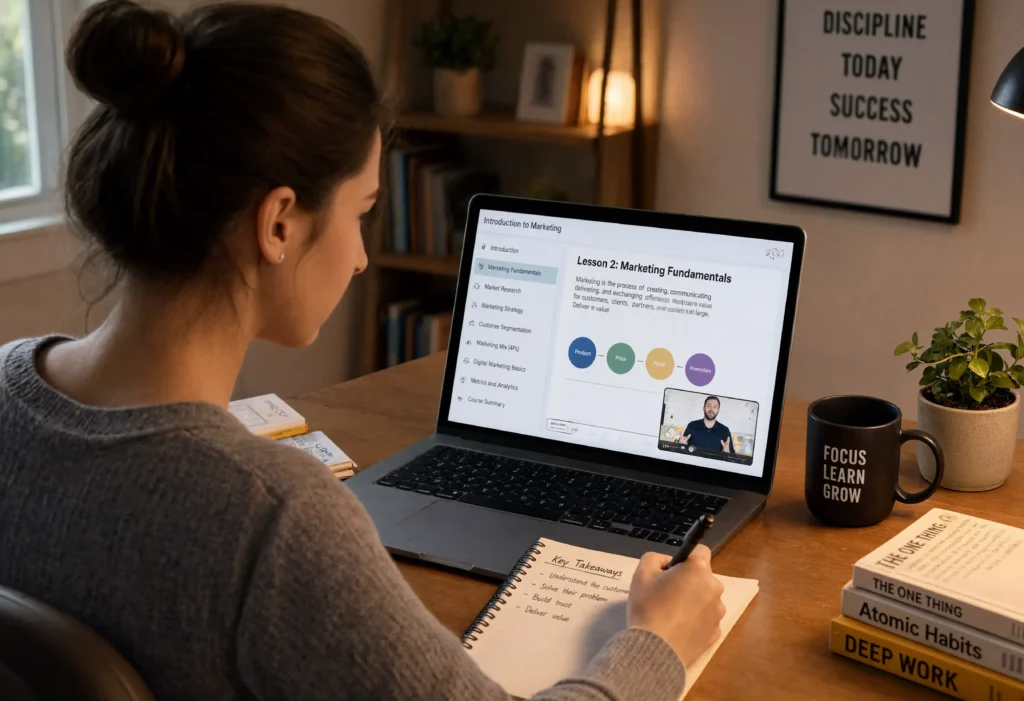
So what is eLearning and how does it work at its core? eLearning is short for electronic learning. It means learning that happens with the help of a digital device, such as a computer, tablet, or phone. Instead of sitting in a classroom with a teacher standing in front of you, you learn through videos, articles, quizzes, and other content shown on a screen.
eLearning can happen live, with a real teacher guiding a group in real time. It can also happen on your own schedule, using lessons that were recorded ahead of time. Either way, the learning is delivered through technology instead of a printed textbook or an in-person class. Companies use eLearning to train new staff. Schools use it to teach students from a distance. Everyday people use it to pick up a new skill, from cooking to coding to public speaking. Once you see how wide this covers, the question of what is eLearning and how does it work starts to make a lot more sense.
A Quick Look at How eLearning Started
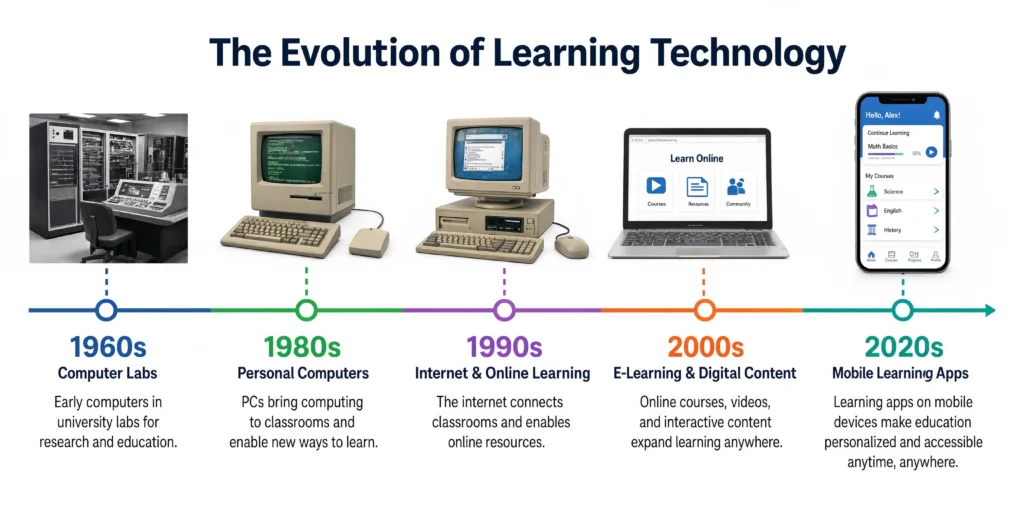
eLearning is not brand new. It has been growing quietly for more than sixty years.
In the 1960s, a few universities used early computers to run simple drills for students. In the 1990s, the internet made it far easier to share lessons with people outside a classroom. By the 2000s, many schools and companies had built their own online courses, and video sites made lessons easier to record and share. Today, eLearning is everywhere. You can learn a new language on your phone during a coffee break. You can finish a work training course from your couch. This steady growth is exactly why so many people now ask what is eLearning and how does it work, since it now touches almost every industry, from healthcare to retail to software.
How Does eLearning Work? The Basic Process
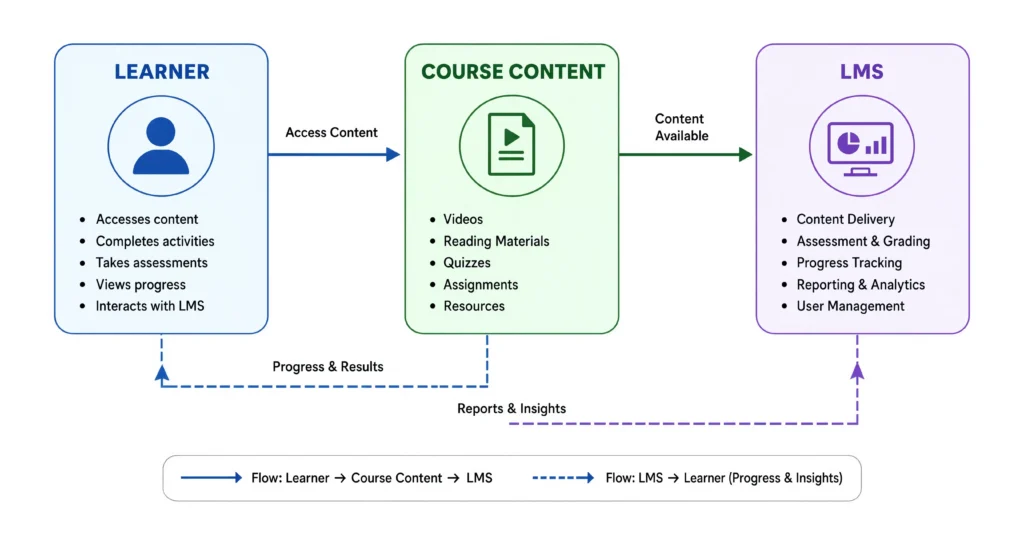
Now let’s answer the second half of the question. How does eLearning work in practice? The process comes down to three main parts working together: the learner, the course content, and the technology that connects them.
The Learner’s Side
On your side as a learner, eLearning feels simple. You log into a website or app. You watch a video, read a page, or listen to audio. Then you might answer a quiz question or complete a small task to show what you learned. The system keeps track of your progress and tells you what comes next. You can usually learn at your own speed. You can pause a video, rewind a section you missed, or repeat a lesson as many times as you need until it clicks. This is one of the biggest reasons people prefer eLearning over a fixed classroom schedule.
The Creator’s Side
On the other side, someone has built that course before you ever saw it. A course creator, often called an instructional designer, plans out the lessons. They decide what to teach, in what order, and how to check that it landed. They write scripts, record videos, and build quizzes that actually test understanding rather than memory. This is where instructional design comes in, and it is why some courses feel clear and easy to follow while others feel confusing and disjointed. Learning the basics of instructional design can help you create courses that are easier to follow, more engaging, and more effective at helping learners achieve their goals.
The Technology Behind It: The LMS
Behind both sides sits a piece of software called a Learning Management System, or LMS. This is the engine that makes eLearning work at scale.
An LMS stores all the course content in one place. It tracks who has finished which lesson. It runs the quizzes and records the scores. It sends out certificates once a course is complete, and it lets a manager or teacher see how a whole group is doing at a glance.
Most course content also follows a technical standard called SCORM, set by the Advanced Distributed Learning initiative, so the same course can work across different LMS platforms without being rebuilt from scratch. If you want to go deeper on this piece, our guide on what is a Learning Management System explains it in full. In short, when people ask what is eLearning and how does it work, the honest answer is: a learner, a well-planned course, and an LMS, all working together.
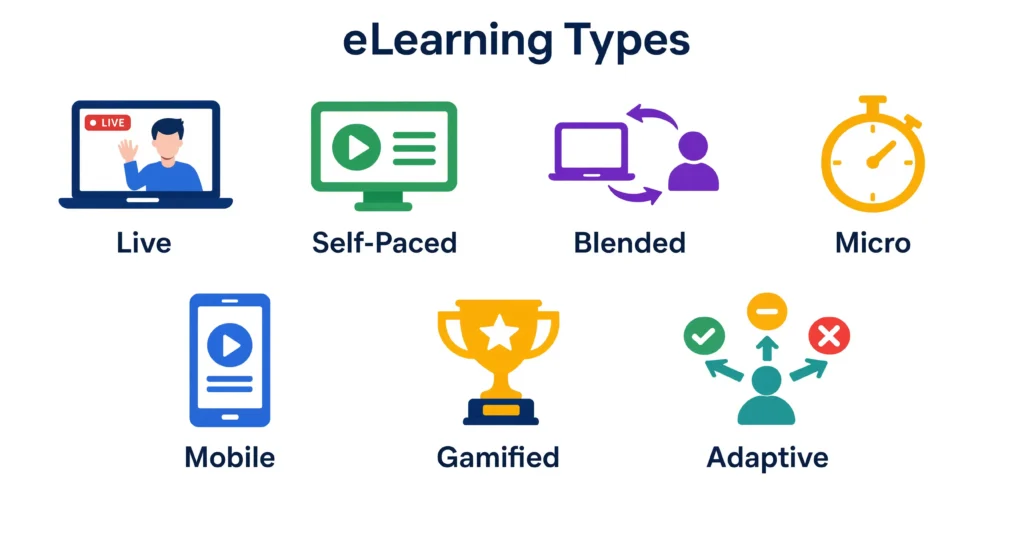
The Main Types of eLearning
eLearning is not just one thing. There are several types, and each one works a little differently. Knowing these types helps you understand what is eLearning and how does it work across different settings, from a school to a warehouse floor.
Synchronous eLearning
Synchronous eLearning happens live. A teacher and a group of students join at the same time, usually over a video call. This feels closer to a real classroom, just delivered through a screen instead of a room.
Asynchronous eLearning
Asynchronous eLearning happens on your own schedule. You watch pre-recorded videos or read lessons whenever it suits you, without waiting for anyone else. Most self-paced online courses work this way, which is part of why they are so popular.
Blended Learning
Blended learning mixes both styles. You might watch a set of videos at home, then join a live session to ask questions and practice with others. Many schools and companies now lean on this mix, since it gives structure without losing flexibility.
Microlearning
Microlearning breaks a topic into short pieces, often just a few minutes long. It fits into a busy day, like a break between meetings, and it is far easier to remember than a long lecture. You can read more in our post on what is microlearning.
Mobile Learning
Mobile learning, often shortened to mLearning, is any course built to run smoothly on a phone or tablet. You can learn on a bus, in a waiting room, or during a lunch break, without needing a laptop at all.
Gamified Learning
Gamified learning adds points, badges, or levels to a course. This makes learning feel a little more like a game, which keeps people motivated to finish. Our article on what is gamification in eLearning covers this style in detail.
Adaptive Learning
Adaptive learning uses software that changes based on how you answer questions. If you struggle with a topic, it gives you more practice on that exact spot. If you already know it well, it moves you ahead faster, so you never waste time on material you have already mastered.
eLearning in Schools vs. eLearning at Work
The exact same idea shows up in two very different places, and it is worth telling them apart.
In schools, eLearning often supports or replaces regular classes. Students log into a portal, watch lessons, submit assignments, and take tests online. It gives students in remote areas access to teachers and subjects they might not otherwise have.
At work, eLearning usually means training. New hires complete onboarding courses. Staff complete safety or compliance training every year. Sales teams learn about new products through short courses instead of a long in-person workshop. In both cases, the same basic answer to what is eLearning and how does it work still applies: content, delivered through technology, tracked by a system.
What Tools Make eLearning Work?
To fully answer what is eLearning and how does it work, we need to look at the tools sitting behind the scenes.
Learning Management Systems
As mentioned earlier, the LMS is the base of most eLearning setups. Well known systems include Moodle, TalentLMS, and Docebo. They host the courses, manage user accounts, track scores, and hand out certificates.
Authoring Tools
Authoring tools are what course creators use to actually build the lessons. Tools like Articulate 360 and iSpring let a creator build quizzes, add video, and design interactive slides without writing any code.
Video and Recording Tools
Most eLearning today leans heavily on video. Creators use tools like Camtasia or Loom to record and edit lessons, and screen recording to show a step by step task on a computer. Groups like the Association for Talent Development study which formats and tools actually help people learn and remember more, which shapes how modern courses get built.
Why Do People and Companies Use eLearning?
There are clear reasons why so many people ask what is eLearning and how does it work before deciding to use it. Once you see the benefits laid out, it makes a lot more sense.
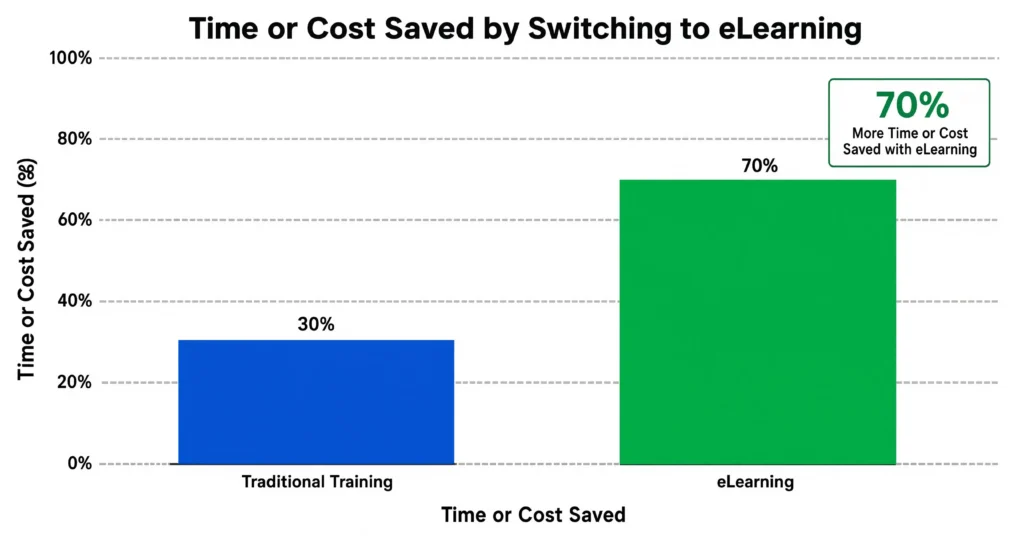
- It saves time and money. There is no travel, no printed books, and no need to rent a room.
- You learn at your own pace, going slower on hard topics and faster on easy ones.
- Content is easy to update. A change can go live for every learner at once, instead of reprinting a textbook.
- It reaches far more people at the same time, across cities or even countries.
- Progress and results are tracked automatically, so nobody has to grade a stack of paper by hand.
“The beautiful thing about learning is that no one can take it away from you.”
— B.B. King
What Are the Challenges of eLearning?
eLearning is not perfect. Knowing the downsides is part of fully understanding what is eLearning and how does it work in the real world, not just the pitch version.
- It takes self-discipline. Nobody is standing over you, so it is easy to fall behind.
- It needs a working device and a stable internet connection, which not everyone has.
- It can feel isolating without live interaction or classmates to talk to.
- Accessibility has to be planned for, not bolted on later. Courses need to work for learners with visual, hearing, or motor differences, and the Web Content Accessibility Guidelines are the standard most teams design against.
How to Get Started With eLearning
By now you have a full picture of what is eLearning and how does it work. If you want to try it yourself, here is where to start.
If you want to learn: pick one clear topic instead of five. Choose a course from a source you trust. Set a fixed time each week to study, even if it is short. Track your own progress so you can see how far you have come.
If you want to build courses instead of just taking them, start with the basics of instructional design rather than jumping straight into fancy tools. Learn how to plan a lesson, write a script, and build a quiz that actually checks understanding. That foundation is what separates a course people finish from one they quit halfway through.
The Future of eLearning
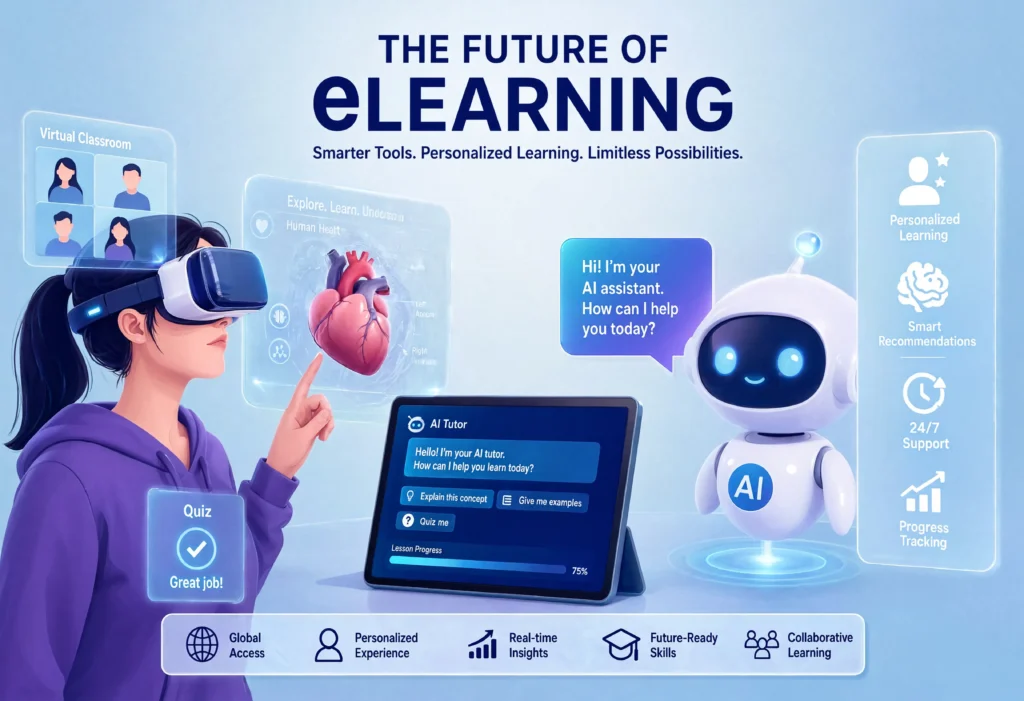
What is eLearning and how does it work will keep changing as technology moves forward. AI tools now help build quizzes and summarize lessons automatically. Virtual reality lets learners practice hands-on tasks in a safe, 3D space before doing them for real. Adaptive systems get a little smarter every year at spotting exactly where a learner is stuck. One thing stays the same, though. Good eLearning always starts with a clear goal, a well planned course, and a real way to check if people actually learned something, not just clicked through slides.
FAQ: What Is eLearning and How Does It Work?
What is eLearning in simple words?
eLearning is learning that happens through a computer, tablet, or phone instead of a printed book or an in-person class.
How does eLearning work for a total beginner?
You sign up on a website or app, watch or read the lessons, then take a short quiz to check what you learned. The system tracks your progress the whole way through.
Is eLearning the same as online school?
Online school is one type of eLearning. eLearning also covers workplace training, hobby courses, and short skill videos, not just formal school classes.
What do I need to start with eLearning?
You need a device such as a phone or computer, a working internet connection, and a course to follow. That is really all it takes to begin.
Is eLearning as good as classroom learning?
Research shows eLearning can be just as effective as a classroom, and sometimes more effective for self-paced skills. It mostly comes down to how well the course itself is built.
Final Thoughts
So, what is eLearning and how does it work? It is learning delivered through digital tools, built by a course creator, hosted on an LMS, and shaped to fit how you like to learn. It comes in many forms, from short mobile lessons to full live classes, and it keeps growing every single year. Whether you want to pick up a new skill or build a course for other people, there has never been an easier time to start.