

Someone asks if your course is accredited. Someone else asks if learners get certified. You might think these are the same question. They are not, and mixing them up can cause real problems, especially if you are marketing training to employers or regulators.
This post breaks down course accreditation vs certification in plain words, with clear examples of each one in action. By the end, you will know exactly which word to use, and when, so your marketing and your learner expectations line up with what your training actually offers.
The Short Answer
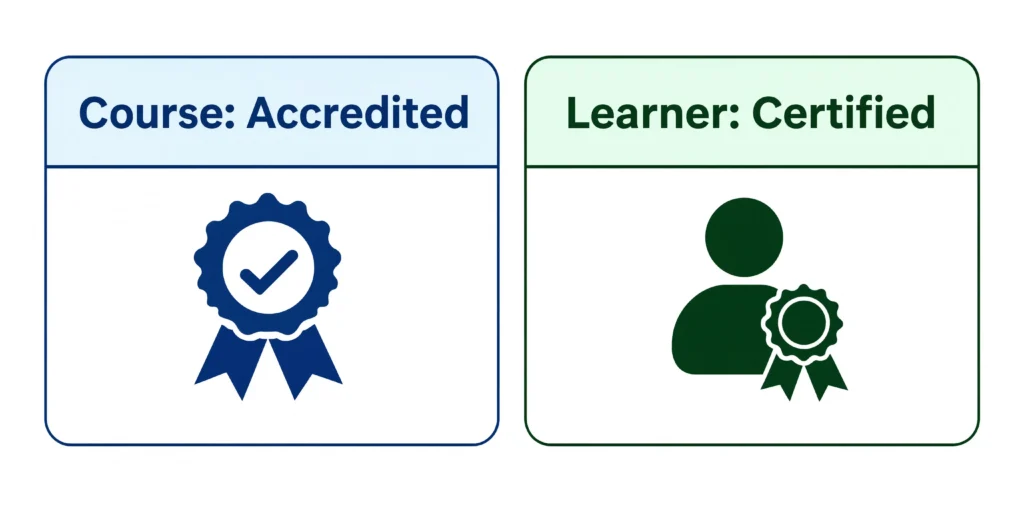
Accreditation is about your course. Certification is about a person. That is the core difference between accreditation and certification, and almost everything else follows from it.
An accredited course means an outside group checked your training and confirmed it meets a real standard. A certified learner means one specific person finished that training and passed whatever test or task proves they learned it. You can have one without the other, and understanding why helps everything else make sense.
Here is a quick way to picture it. Think of a driving school. The school itself can be accredited, meaning an outside body checked that its lessons, instructors, and tests meet a real standard. A student who passes their driving test at the end becomes licensed, which is their own personal certification. The school can lose its accreditation later, and that former student still keeps their license. The two things are simply not tied together the way people often assume.
What Does Accredited Course Meaning Actually Cover?
The accredited course meaning comes down to one thing. Someone outside your organization reviewed your course content, your teaching methods, and how you assess learners, then confirmed it meets their published standard.
This review usually checks a few specific things. Whether your course actually teaches what it claims to. Whether your instructors are qualified. Whether your tests or assignments genuinely measure whether someone learned the material. And whether you have a real process for updating content and handling learner complaints.
Course accreditation explained simply, it is a quality check on the training itself, not on any individual learner who takes it. Two people can take the same accredited course. One studies hard and passes easily. The other barely scrapes by. The course stays equally accredited either way, since accreditation is about the course, not the person taking it.
What Does Certified Course Meaning Actually Cover?
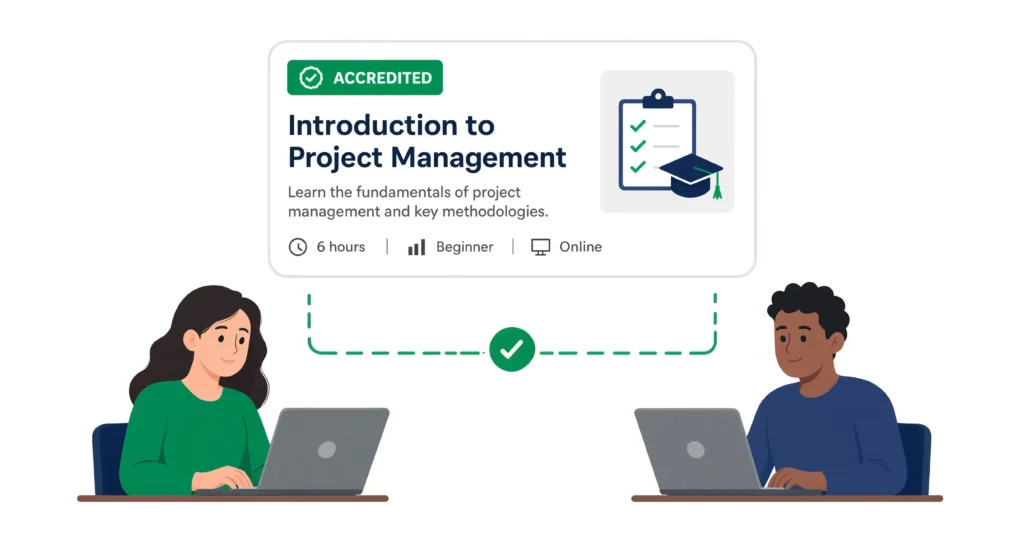
Certified course meaning works differently. This usually points to what a learner earns after finishing, not a quality stamp on the course itself. A person passes a final exam or completes a required project, and they receive a certificate showing they met that specific bar.
Professional certification explained this way makes the picture clearer. A doctor, an electrician, or a project manager holds a certification because they personally passed an exam proving their own competence, separate from whichever course or study program helped them prepare. The certification belongs to the person. It travels with them if they change employers. A course accreditation stays with the training provider, not the learner.
Accreditation vs Certification in Education: A Side by Side Look
Looking at accreditation vs certification in education side by side makes the difference stick. An accredited course has been checked by an outside body and meets a written quality standard. A certified learner has personally passed an assessment tied to that standard.
A school can lose its accreditation while past graduates keep their certifications, since the person already proved their competence at the time they earned it. On the flip side, a currently accredited course can produce a learner who never finishes or never passes the final assessment, meaning that person never becomes certified even though the course itself remains fully accredited.
This distinction also affects who you blame when something goes wrong. If a whole program turns out to be low quality, that is an accreditation problem, something wrong with the training itself. If one specific person cannot actually do the job despite holding a certificate, that often points to a gap in how that individual case was assessed, not necessarily a flaw in the entire course.
This is also why regulators and employers care about both, but for separate reasons. A regulator checking whether a training provider can keep operating cares mostly about accreditation. A hiring manager checking whether one candidate can actually do the job cares mostly about that person’s certification. Mixing the two up in a conversation with either group can make you sound less credible than you actually are.
Why Training Providers Mix These Two Words Up
Marketing language is usually the culprit. Saying “get certified with our accredited course” sounds fine on the surface, but it blends two separate claims into one sentence, and learners often walk away assuming both apply automatically.
In reality, your course can be accredited while a specific learner still fails to earn certification, if they do not pass the required assessment. Being honest about this distinction in your marketing protects you from complaints later, especially from someone who assumed a certification was guaranteed just because the course carried real accreditation.
A simple fix is separating the two claims into two clear sentences instead of one blended one. Something like “This course is accredited by [body name]” as one statement, and “Learners who pass the final assessment earn a certificate in [specific skill]” as a separate one. This small change removes almost all the confusion without making your marketing sound less impressive.
“[Placeholder expert quote, for example from our Head of Accreditation Services or a compliance advisor, on the biggest confusion they see between accreditation and certification claims in marketing copy. Replace with a real, attributed quote before publishing.]”
Accreditation and Certification Requirements Compared
Accreditation and certification requirements look different because they are checking different things.
For accreditation, a body typically wants proof of clear learning outcomes, qualified instructors, a real assessment method, documented processes, and organizational stability. This is covered in far more depth in our full breakdown of course accreditation requirements, which walks through each requirement with a practical checklist.
For certification, the requirements sit with the individual learner. They usually need to pass a specific exam, complete required hours of study or practice, and sometimes renew their certification periodically through continuing education. A well known standards body in this space, the Institute for Credentialing Excellence, publishes detailed guidance on what a legitimate certification program should include, which is a useful reference if you are building a certification track alongside your accredited course.
One detail worth noting. A learner can sometimes retake a certification exam if they fail, without the underlying accredited course needing to change at all. The course stays the same. Only that individual’s path to certification gets extended by however long it takes them to pass on a later attempt.
The overlap between the two shows up mostly in documentation. Both processes want proof that assessments are fair, consistent, and actually tied to real skill. But accreditation looks at that proof across your whole course and how you run it, while certification looks at it for one individual exam attempt at a time.
Do Accredited Online Courses Work the Same Way?
Yes, and this comes up often. Accredited online courses go through the same basic review as in person ones. An accrediting body still checks content quality, instructor qualifications, and assessment methods. Online courses also face a few extra checks, like how you verify learner identity during a test and how you track genuine progress instead of just page views.
Certification works the same way whether the course was taken online or in person. What matters for certification is whether the individual learner actually passed the required assessment, not which delivery method they used to prepare for it.
This is good news for providers running fully remote programs. A well built online course held to the same standard as an in person one can lead to the exact same certification outcome for a learner. The delivery method does not lower the bar, as long as the accreditation process actually confirmed the online version meets it.
How This Difference Affects Your Marketing
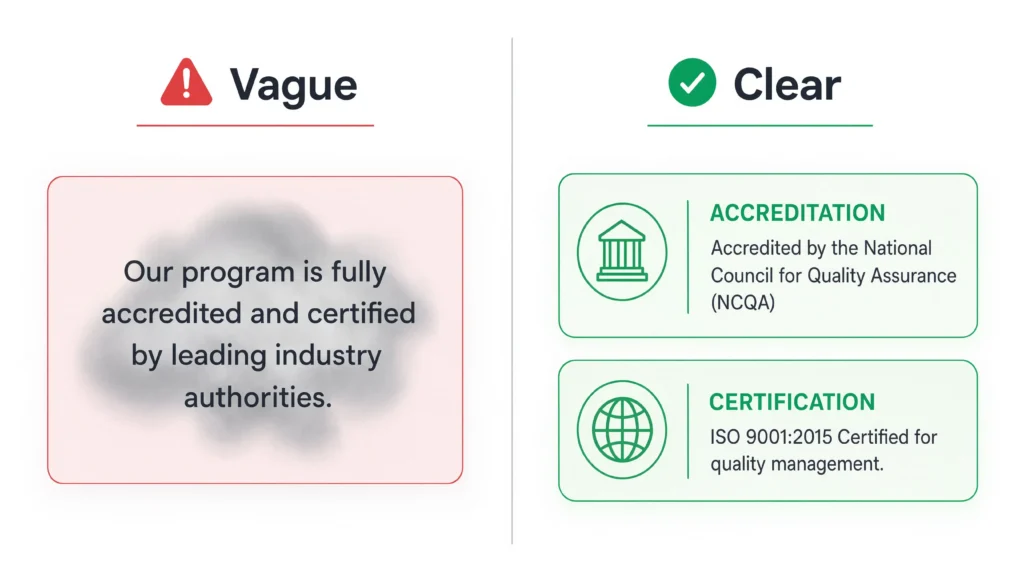
Be specific about which claim you are making. If your course is accredited, say that clearly, and explain what body accredited it. If learners earn a certificate upon completion, say that separately, and be clear about what earning that certificate actually requires.
Avoid vague phrases that blur the two together. A learner who reads your course page should understand exactly what they get if they finish, and exactly what your accreditation covers versus what their own personal certification requires them to do.
If you are still working out your own accreditation status, our guide on choosing the right accreditation body can help you figure out which organization actually fits your course and your industry before you make any public claims about being accredited. Well known bodies like CHEA maintain public lists of recognized accreditors, which is a useful sanity check before you commit to one.
Frequently Asked Questions
Q: Can a course be certified instead of accredited?
A: Not exactly. Courses get accredited. Individual learners get certified after finishing a course or passing an exam. A course itself does not hold a personal certification the way a person does.
Q: Does every accredited course lead to a certification?
A: No. Some accredited courses simply issue a certificate of completion, which is different from a formal professional certification tied to an industry recognized exam. Always check what a specific course actually offers rather than assuming.
Q: Is accreditation always required before a course can offer certification?
A: Not always, though it helps a lot. Some certification bodies will accept training from any course as long as the learner passes their own independent exam. Others require the training itself to come from an accredited source first.
Q: Which matters more to employers, accreditation or certification?
A: Both matter, but for different reasons. Accreditation reassures an employer the training itself was solid. Certification proves the specific person they are hiring actually passed an assessment tied to real skill.
Q: Can a training provider lose accreditation without affecting past certifications?
A: Yes. Certifications already earned usually stay valid, since the learner met the standard at the time they were assessed. Only new enrollments in that specific course are affected by a lost accreditation going forward.
Final Thoughts
Course accreditation vs certification comes down to one clear line. Accreditation is a quality check on the training. Certification is proof that one specific person met a bar. Keeping this straight protects your marketing, sets clear expectations for learners, and helps you explain your training honestly to employers and regulators.
If you are exploring accreditation for the first time, our complete guide on course accreditation covers the full process from start to finish, including how it connects to whatever certification path you plan to build around it. And if you want to see the practical upside of going through the process, our post on the benefits of accredited courses breaks down exactly what it can do for your enrollment and credibility.